Applications
Three applications, three configurations
A camera module, a harness terminal and a nebulizer mesh all need solder, at very different sizes, cleanliness levels and cycle times. The technology is shared; the configuration is not.
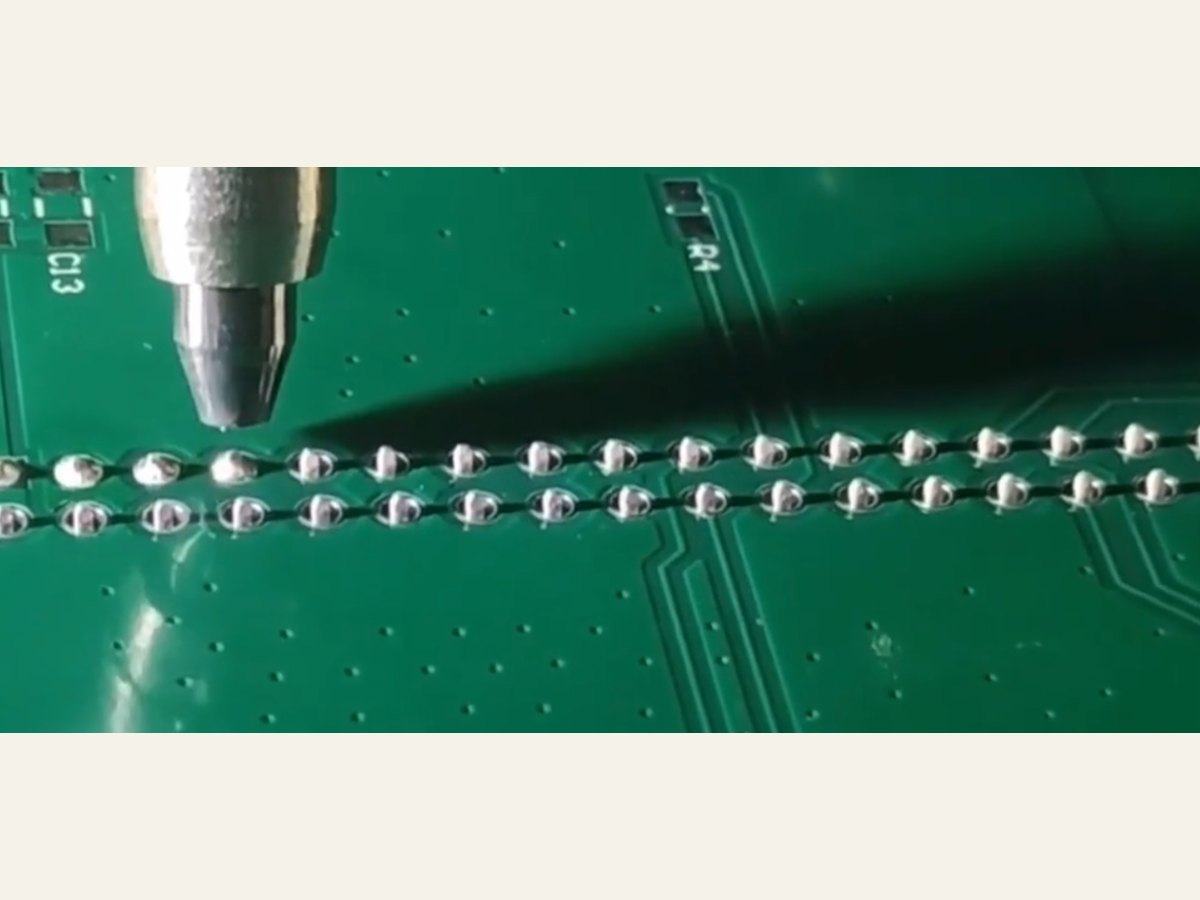
First the constraint, then the machine
Each configuration starts from what limits the joint — usually space, takt or cleanliness.
Joints in phones, wearables and camera modules
Space is the constraint: the joint is small, the pitch is tight, and a heat-sensitive part sits next door. An iron does not fit, and a wire nozzle does not reach. Yield depends on joint consistency, and consistency depends on parameters, not on hands.
- Desktop laser cell with coaxial CCD
- Dual-station transfer, loading and soldering in parallel
- Solder wire 0.2–1.2 mm, feed timed with the laser
- Back-to-back build: paste and solder in one cycle
- Inline build tied to an SMT or assembly conveyor
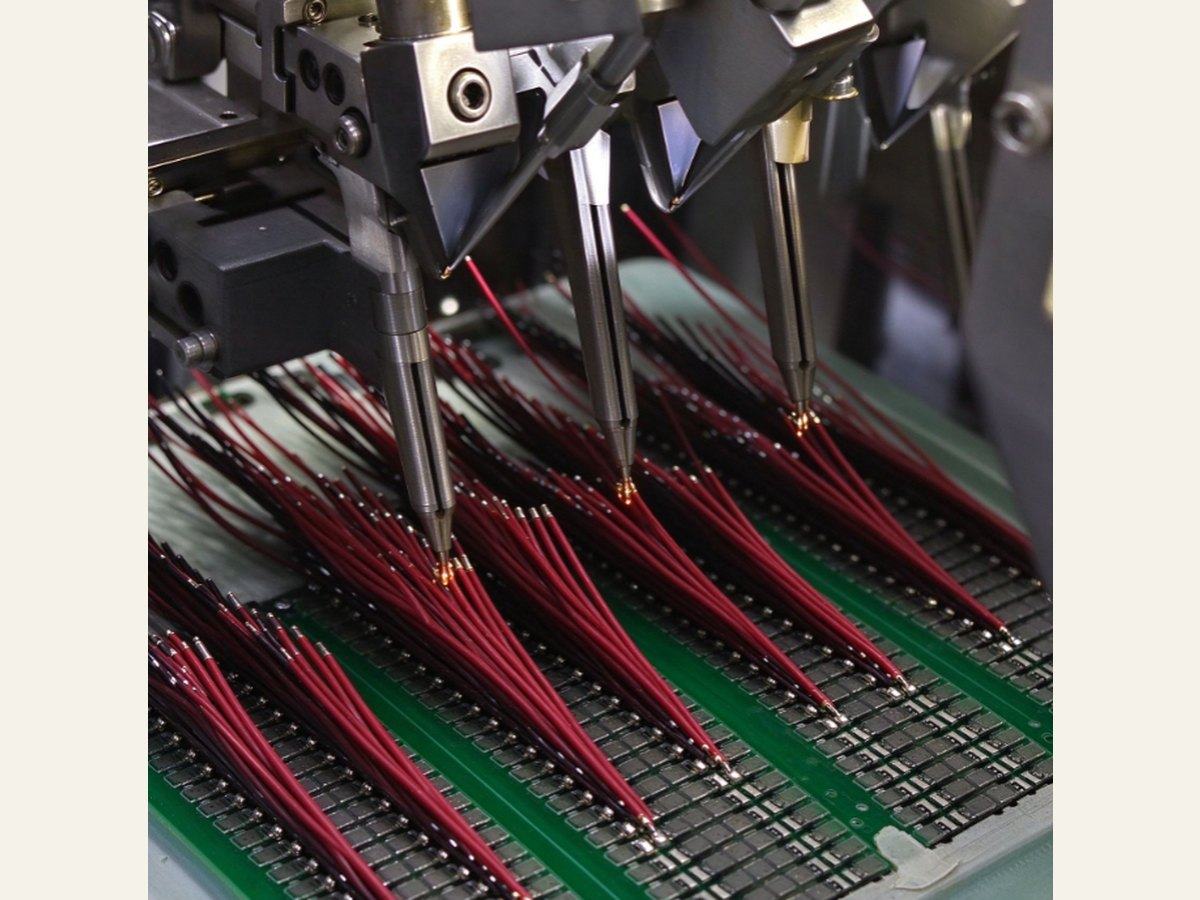
Harness, terminal and CCS soldering
Automotive and energy work is governed by cycle time and repeatability: the line ships to the vehicle takt, and every joint has to be reproducible. Manual placement cannot hold that takt, so cutting, stripping, tinning and soldering have to be sequenced.
- Automatic wire soldering: 16 or 24 axes, 6 heads
- 1–6 wire colours, 30–300 mm length
- Cut, strip, tin, pick and solder in sequence
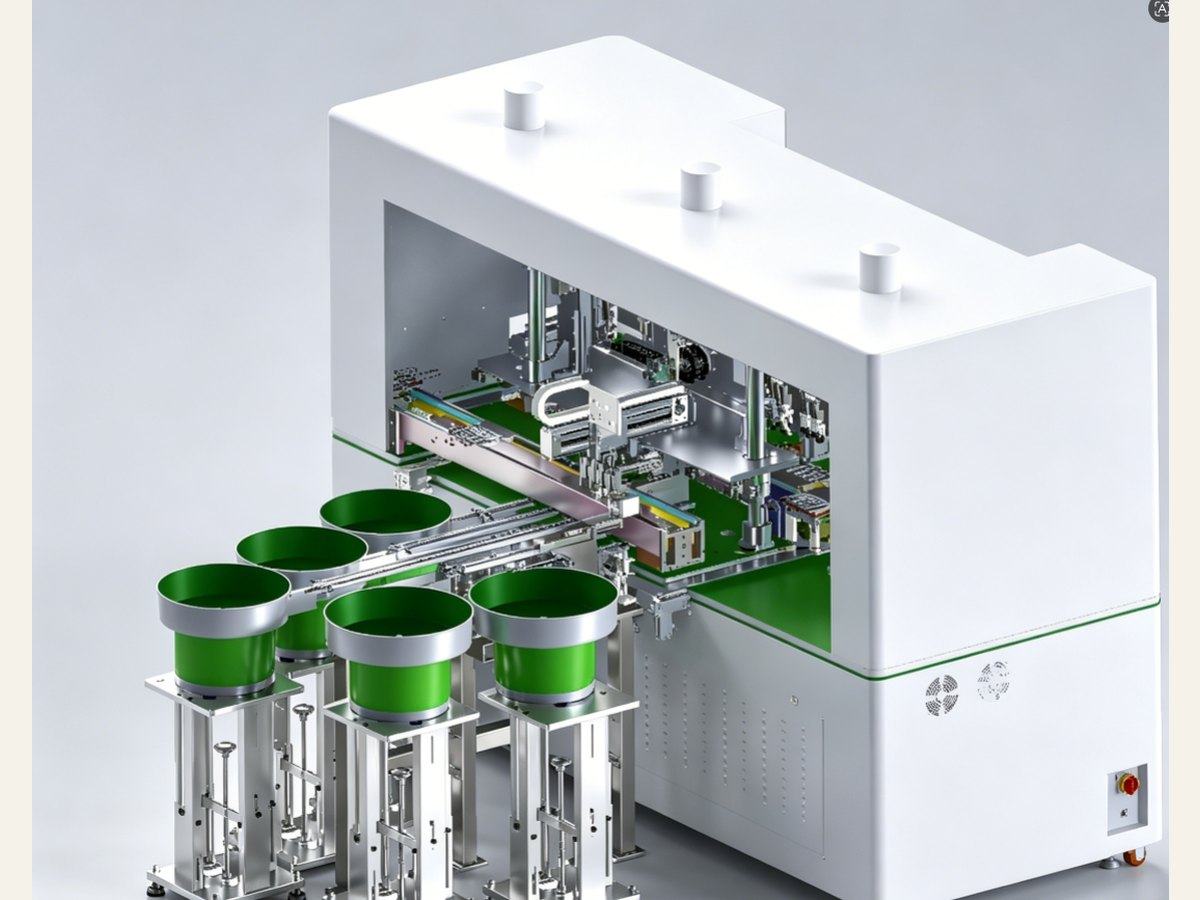
- HC-600 automatic terminal wire machine
- Backlight CCS on a two-level station layout
Nebulizer mesh, capsules and micro joints
Medical work is governed by cleanliness and heat: small parts, thin finishes, and oxidation or heat spread turns straight into rejections. Contact-free soldering with controlled energy input comes first, cleanliness second.
- Laser ball jetting, contact-free melting
- Balls 100–1800 µm, disc feed
- Nitrogen-assisted release to limit oxidation
- CCD positioning, ±5 µm repeatability
- Nebulizer mesh and microphone capsule lines
Describe the constraint, not the machine.
Tell us what your current process cannot do, and the configuration follows from it.