BALL
Laser solder ball jetting
Disc-fed solder balls from 100 to 1800 µm, melted by laser without contact and released with nitrogen, built for micro joints.
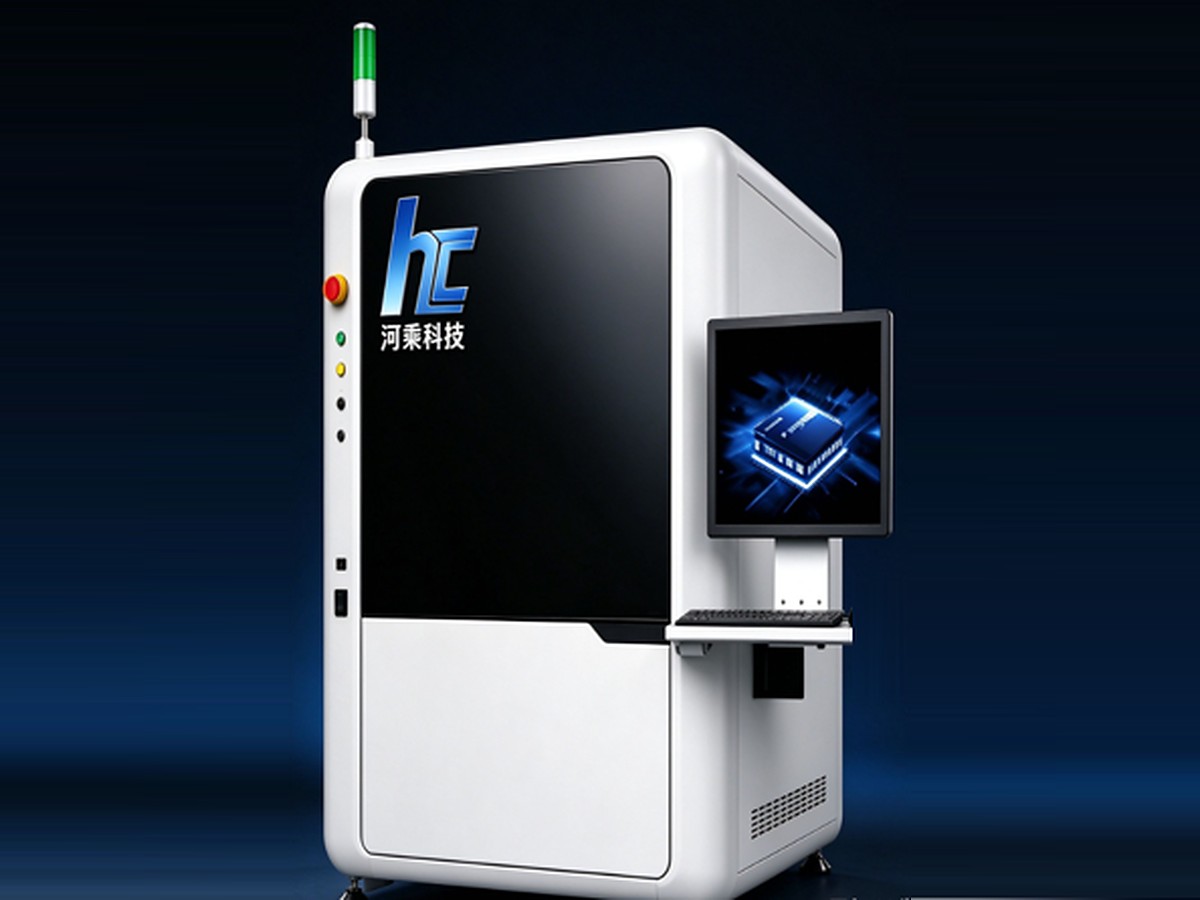
Ball jetting solves a specific case: the joint is too small or too dense for solder wire and the iron cannot reach it. A disc delivers one ball to the nozzle, the laser melts it without touching, and nitrogen pushes the drop onto the pad. One ball, one joint.
Because nothing touches the workpiece, the heat-affected zone stays at the joint itself. That is what camera modules, automotive electronics, medical devices and semiconductor packages need: clean soldering and ball placement on micro pads. Dual tracks alternate fixtures so loading never waits for the laser.
What it solders
- Solder balls from 100 µm to 1800 µm
- Camera modules, sensors, BGA and MEMS joints
- HDD heads (HGA / HSA) and optoelectronic packages
- Flex connections in phones, cameras and wearables
- Ball placement where no contact and minimal heat are allowed
| Machine | Automatic solder ball jetting (laser ball soldering) |
|---|---|
| Laser power | 100–300 W, selected per process |
| Wavelength | 1064 nm |
| Cooling | Full air cooling |
| Positioning | CCD vision, nozzle auto-calibrated |
| Repeatability | ±5 µm |
| Ball diameter | 100 µm–1800 µm, disc feed |
| Jetted drop | Above 200 µm |
| Soldering area | 200 × 200 mm |
| Ball rate | ≥3 balls / s |
| Stations | 2, dual-track alternating transfer |
| Footprint | 1200 × 1350 × 1800 mm, approx. 1000 kg |
| Power and environment | AC 220 V / 50 Hz; 22–30 °C, 20–70% RH |
Figures are typical configurations. Final specifications follow the contract and the sample run.
Configuration options
A machine is configured, not bought off a shelf: the options below change what it can do, not only how it looks.
- Laser power at 100, 200 or 300 W, chosen from joint and ball size
- Distance, laser power and laser time set as process parameters
- Nitrogen-assisted release for contact-free soldering
- Fully automatic dual-track transfer, no waiting at load
- Disc feeder matched to the ball diameter in use
Frequent questions
Ball or wire — which one?
It follows joint size and access. Small pads, tight pitch, no room for a feeder nozzle: use a ball, where one ball sets the solder volume instead of a feed length you have to guess. Larger joints and consecutive points are faster with wire. Both lines are built here, so the choice is made on joint size and cycle time together.
How small can the ball go?
From 100 µm up to 1800 µm, covering camera module joints through to larger terminal ball placement. The practical lower limit depends on pad size, feed accuracy and inspection, so a sample run settles it.
Is nitrogen mandatory?
Where cleanliness matters, nitrogen limits oxidation and helps the drop land where it should, so it is standard on these processes. Whether it is strictly required depends on the solder and the pad finish; the sample run compares joints with and without it.
The other three families
One machine rarely covers a whole product. These are the lines that usually sit next to this one.
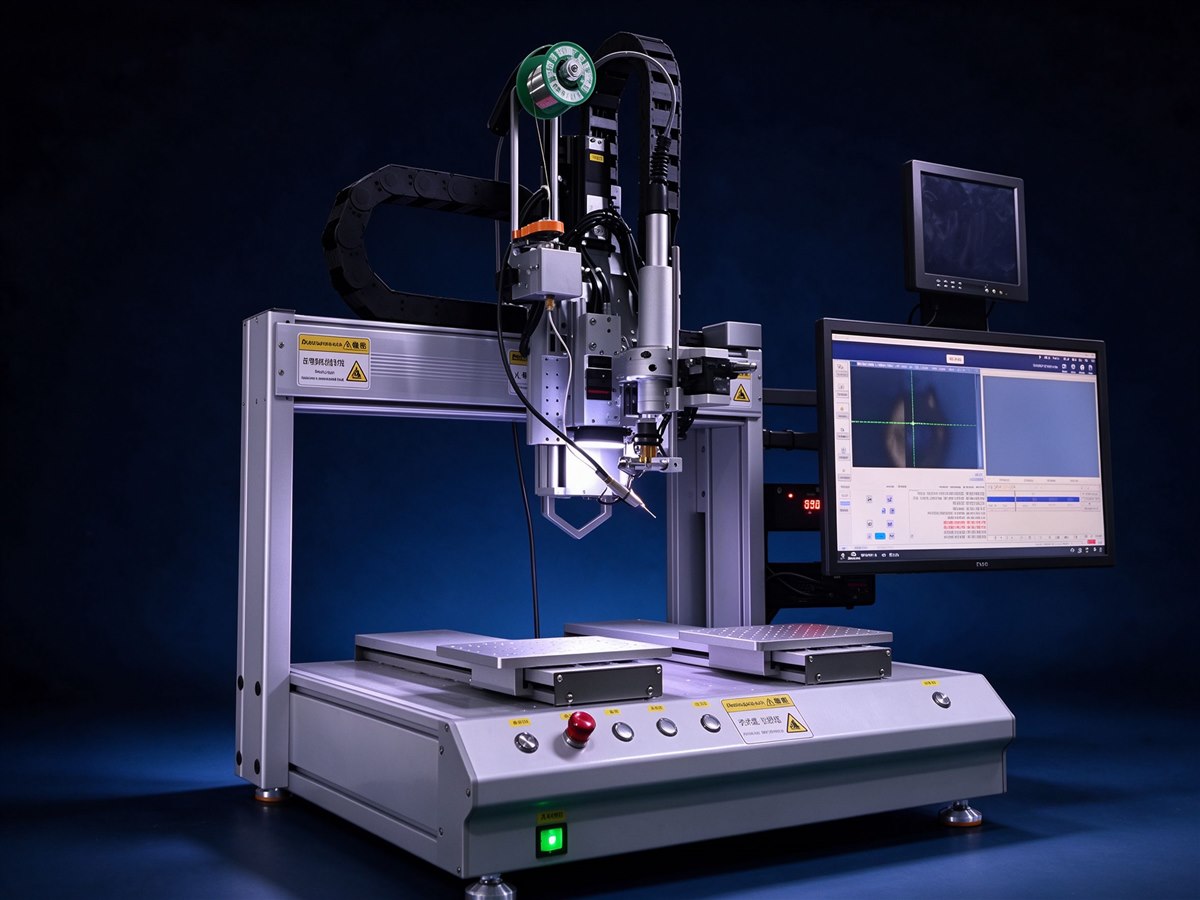
Laser soldering machines
Semiconductor laser heating, coaxial CCD positioning and automatic wire feed, in desktop and inline formats for batch and continuous production.
View the machine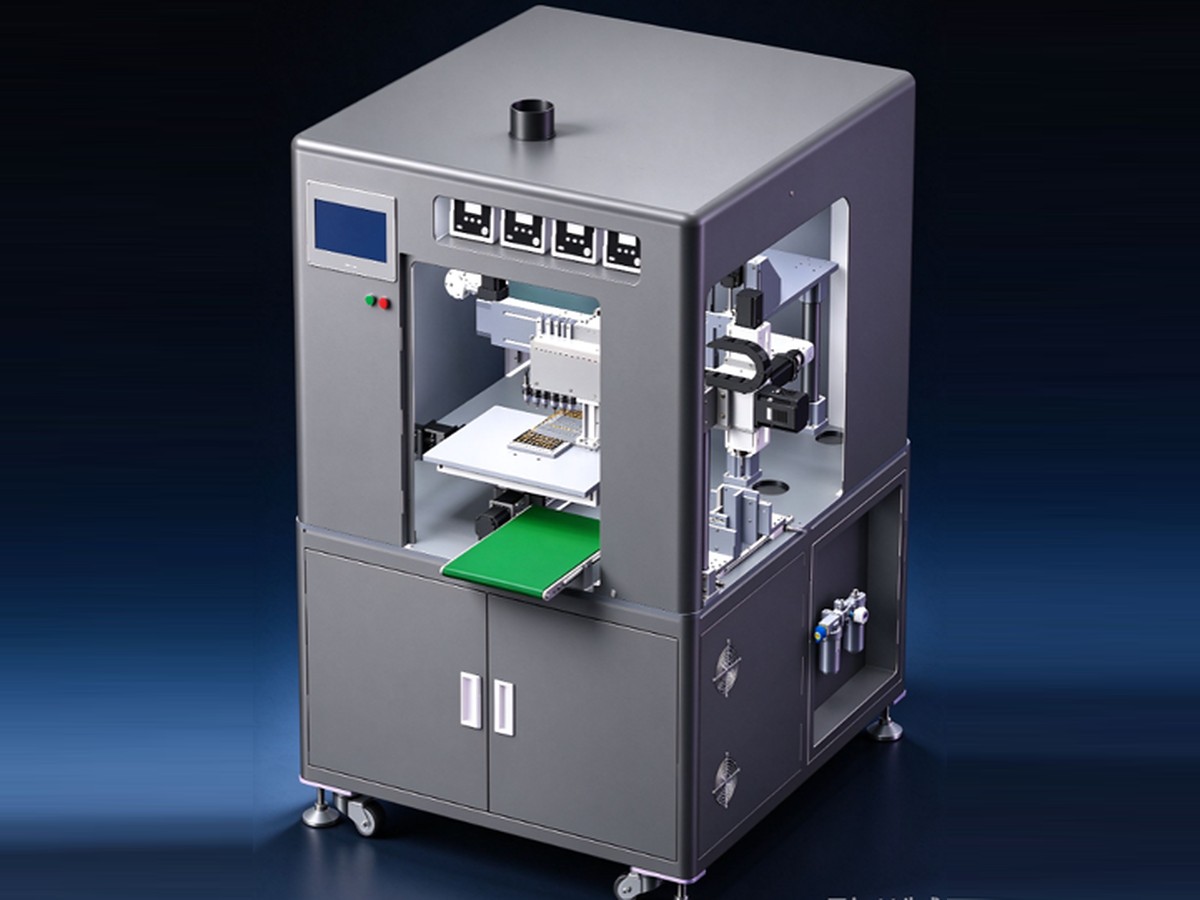
Automatic wire soldering
From a semi-automatic single unit to a 24-axis line: cutting, stripping, tinning, picking and soldering inside one cycle, for 1 to 6 wire colours.
View the machine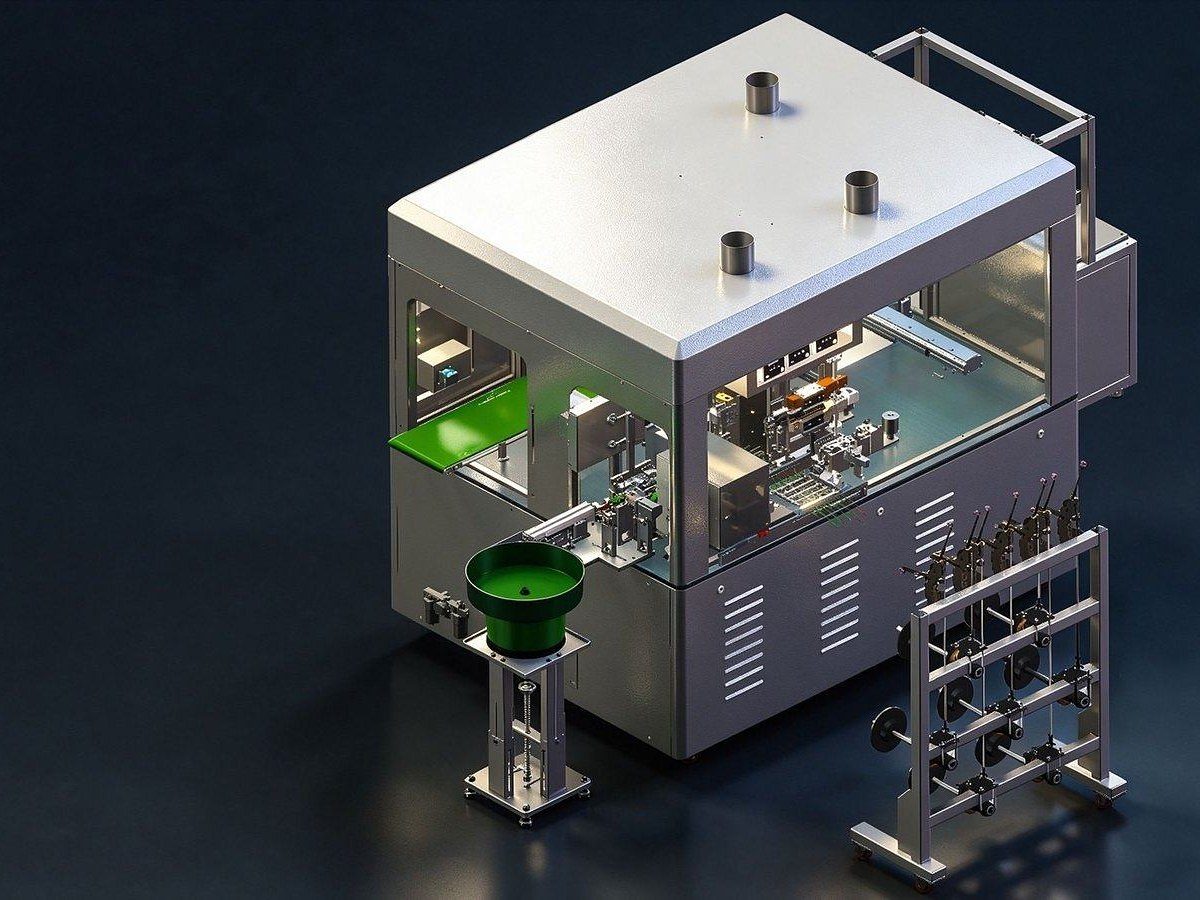
Custom soldering lines
Nebulizer mesh, microphone capsule, earphone, display, car fridge and backlight CCS lines: fixture transfer plus multi-axis platforms, single machine to full line.
View the machineAsk for a configuration for your part.
Send the part photo, the joint position and the cycle time; the reply is a process judgement and a machine layout.