LASER
Laser soldering machines
Semiconductor laser heating, coaxial CCD positioning and automatic wire feed, in desktop and inline formats for batch and continuous production.
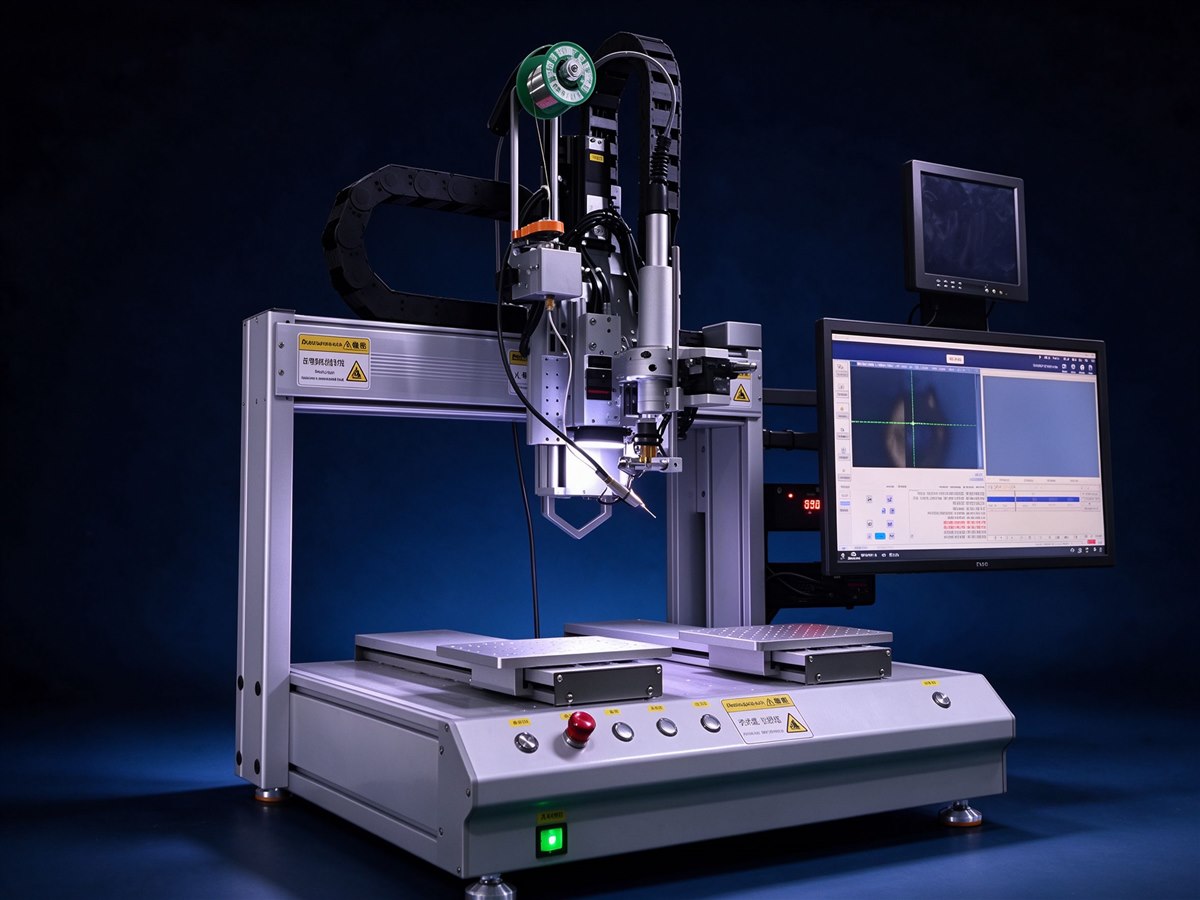
Laser soldering replaces the iron with a beam. Heat lands on the joint and stays there, which is what fine-pitch pads, FPC, connectors and camera modules need: narrow process window, no bridging from a tip dragging across the board.
HanCheng builds three formats from the same process: a desktop cell with single or dual stations and vision, a back-to-back machine that dispenses paste and solders in one cycle, and an inline machine for SMT or assembly lines. On the desktop cell the operator loads outside while two fixtures alternate into the enclosed cell, the CCD finds the joint, the laser heats on a programmed path and the wire feeder sends solder in step.
What it solders
- Connectors, terminals, PCB through-hole parts and FPC joints
- Lead wires on camera modules, sensors and micro-motors
- Solder wire from 0.2 to 1.2 mm in diameter
- Single-station sampling and dual-station batch production
- Inline soldering tied to an SMT or assembly conveyor
| Formats | Desktop with vision / back-to-back / inline |
|---|---|
| Stations | Single, or dual with alternating transfer |
| Positioning | Coaxial CCD, joints found automatically, no manual alignment |
| Laser | Semiconductor laser, power set from joint and solder volume |
| Solder feed | Precision wire feeder, timed with the laser |
| Wire diameter | 0.2–1.2 mm |
| Joint quality | Less bridging and missed joints; consistency held by parameters |
| Power | AC 220 V / 50 Hz |
| Output | Dual-station load and solder in parallel, over 40% faster per part than a single station |
Figures are typical configurations. Final specifications follow the contract and the sample run.
HC-L100 desktop model
The full specification sheet and the machine itself: desktop frame, two fixtures alternating into the closed cell, vision, laser and wire feed in one cycle.
| Laser mode | Continuous / pulsed |
|---|---|
| Laser output power | 50–200 W |
| Spot size | ≥0.2 mm |
| Joining method | Non-contact laser soldering |
| Temperature control accuracy | ≤3 ℃ |
| Pad size | 0.5 × 0.5 mm |
| Time per joint | ≥0.2 s |
| Vision positioning accuracy | 0.01 mm |
| Repeat positioning accuracy | 0.01 mm |
| Solder material | Solder wire |
| Path programming | Automatic from image; special paths editable |
Figures are for the HC-L100 desktop model. Joint results depend on part geometry, wire diameter and process parameters — we recommend a sample run before you commit to a machine.
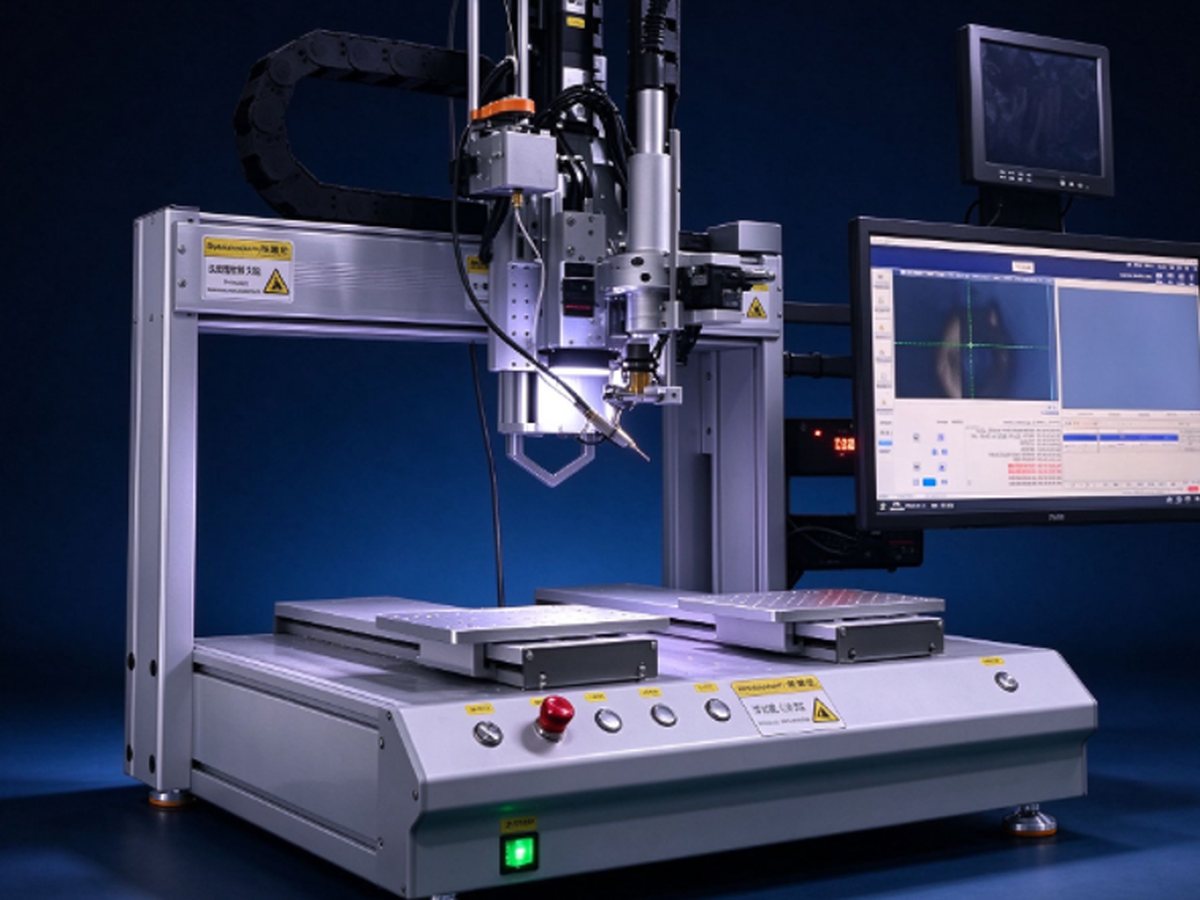
Machine details
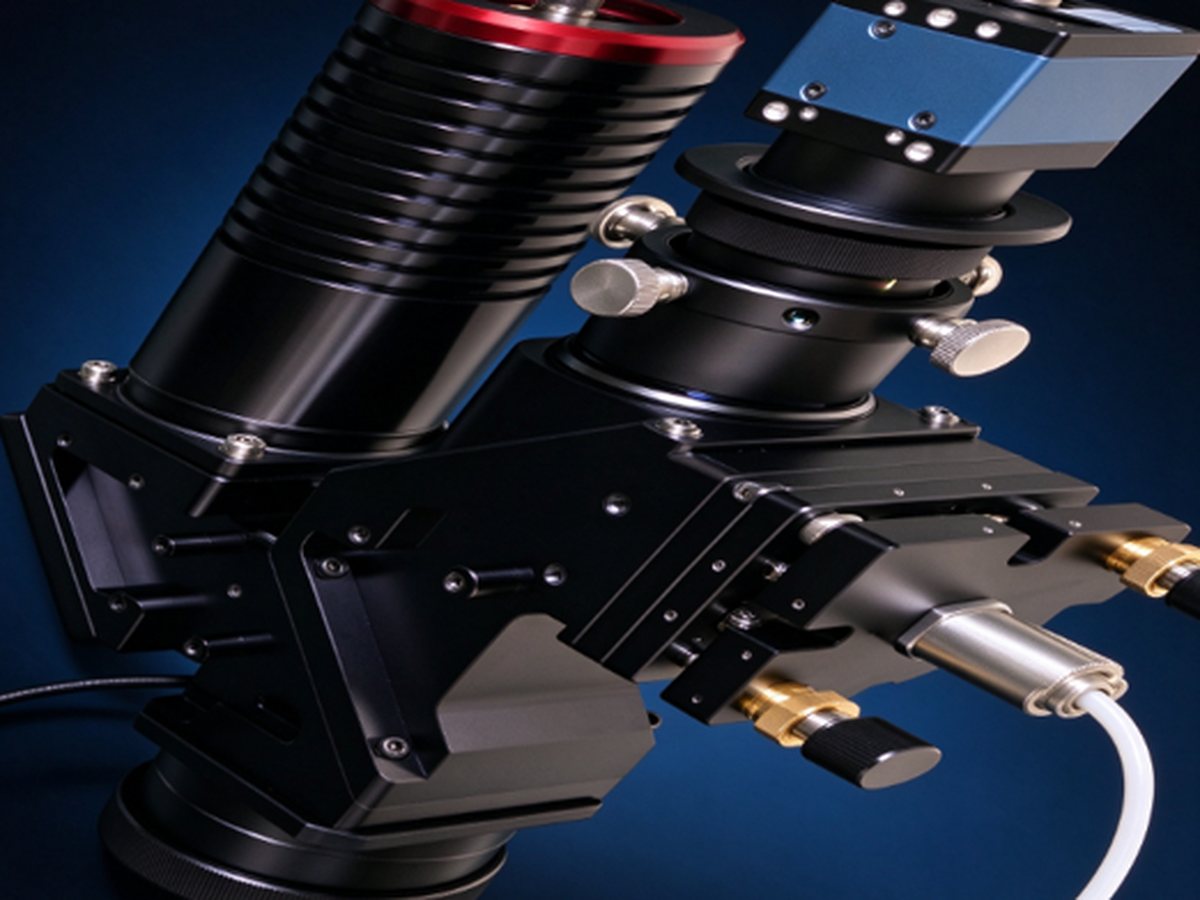
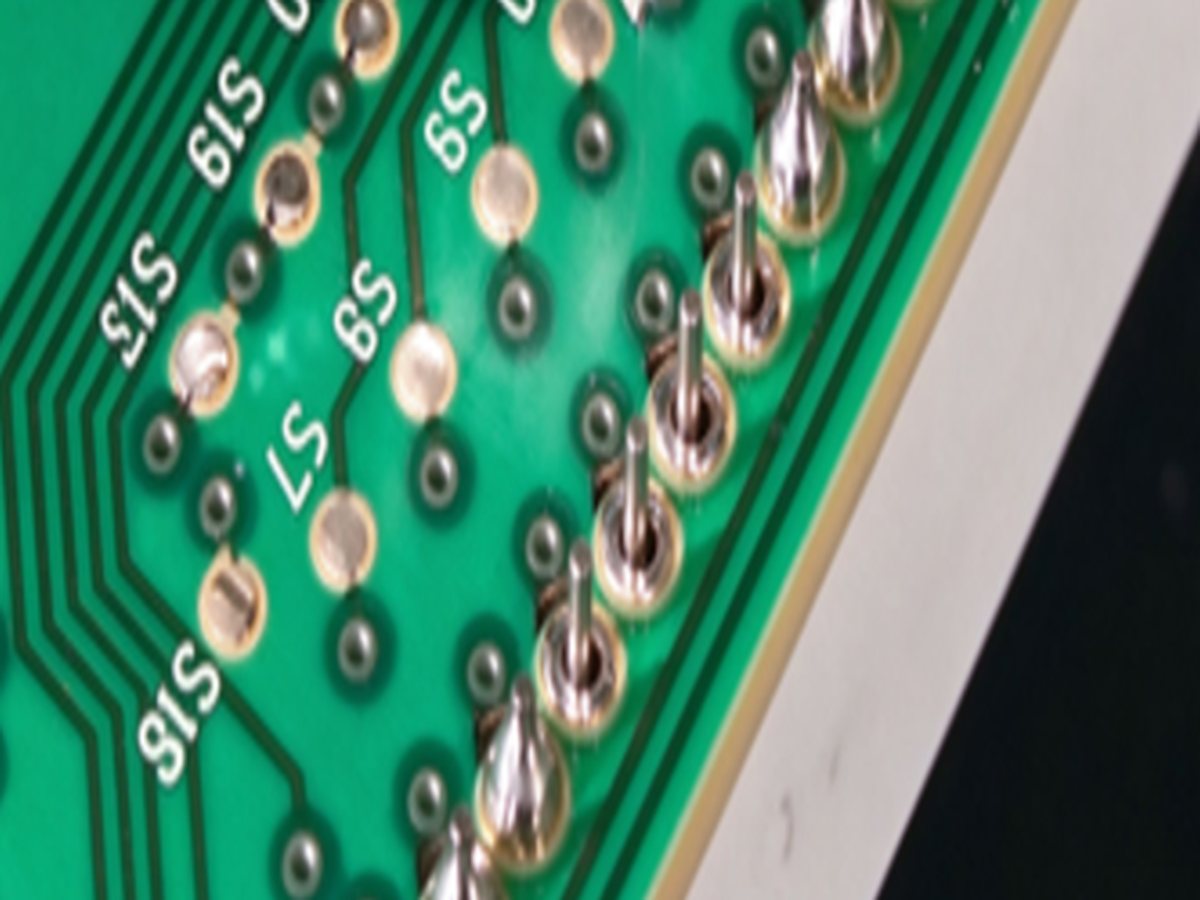
Photos and process samples from our desktop vision-guided laser wire soldering machine: joint recognition, wire feed timed with the laser, finished fillets.
Configuration options
A machine is configured, not bought off a shelf: the options below change what it can do, not only how it looks.
- Back-to-back build: paste dispensing and soldering in the same cycle, shorter part time
- Inline build: dual station in line with an SMT or automated assembly conveyor
- Single or dual fixture set, chosen from batch size and cycle time
- CCD vision instead of manual alignment, so the operator needs less skill
- Automatic wire feeder tied to the laser timing, reducing bridging and missed joints
Frequent questions
What actually changes against an iron?
How the heat is delivered. An iron conducts heat through contact, so it spreads into the part and the pad; fine-pitch and heat-sensitive parts bridge or get damaged. A laser puts energy at the joint for milliseconds. The trade-off is capital cost and the need to define a path and parameters per joint, which is why we run a sample first.
How much output suits the desktop cell?
It suits small and mid-size plants running batches with frequent changeovers: compact, movable, and cheaper than an inline machine. Dual-station transfer runs loading and soldering in parallel, over 40% faster per part than single-station. Move to back-to-back or inline when daily volume rises and the product mix settles.
Does a new product mean a new setup?
A new program, not new mechanics. Joint coordinates, laser power, heat time and wire feed are parameters stored per product. Fixtures follow the workpiece, so changeover time depends on how the part is clamped.
The other three families
One machine rarely covers a whole product. These are the lines that usually sit next to this one.
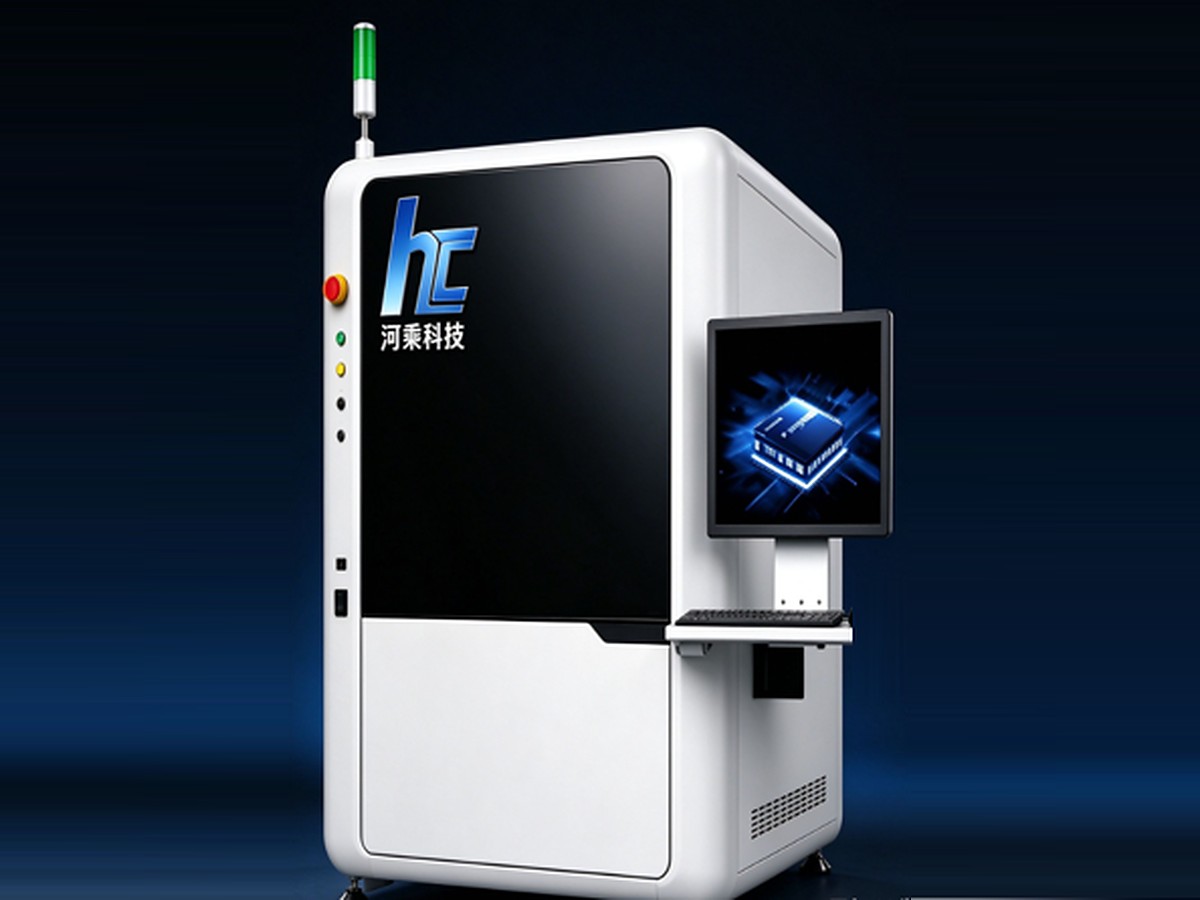
Laser solder ball jetting
Disc-fed solder balls from 100 to 1800 µm, melted by laser without contact and released with nitrogen, built for micro joints.
View the machine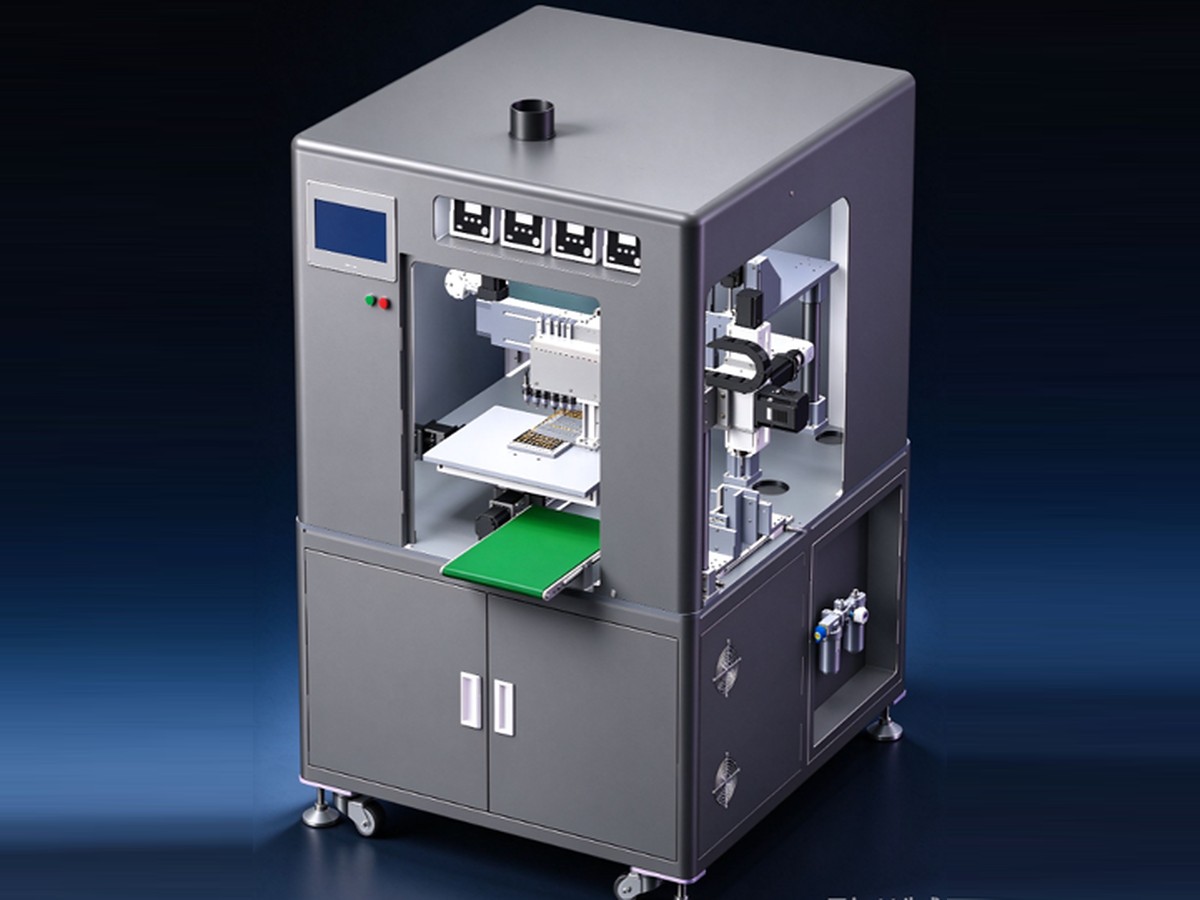
Automatic wire soldering
From a semi-automatic single unit to a 24-axis line: cutting, stripping, tinning, picking and soldering inside one cycle, for 1 to 6 wire colours.
View the machine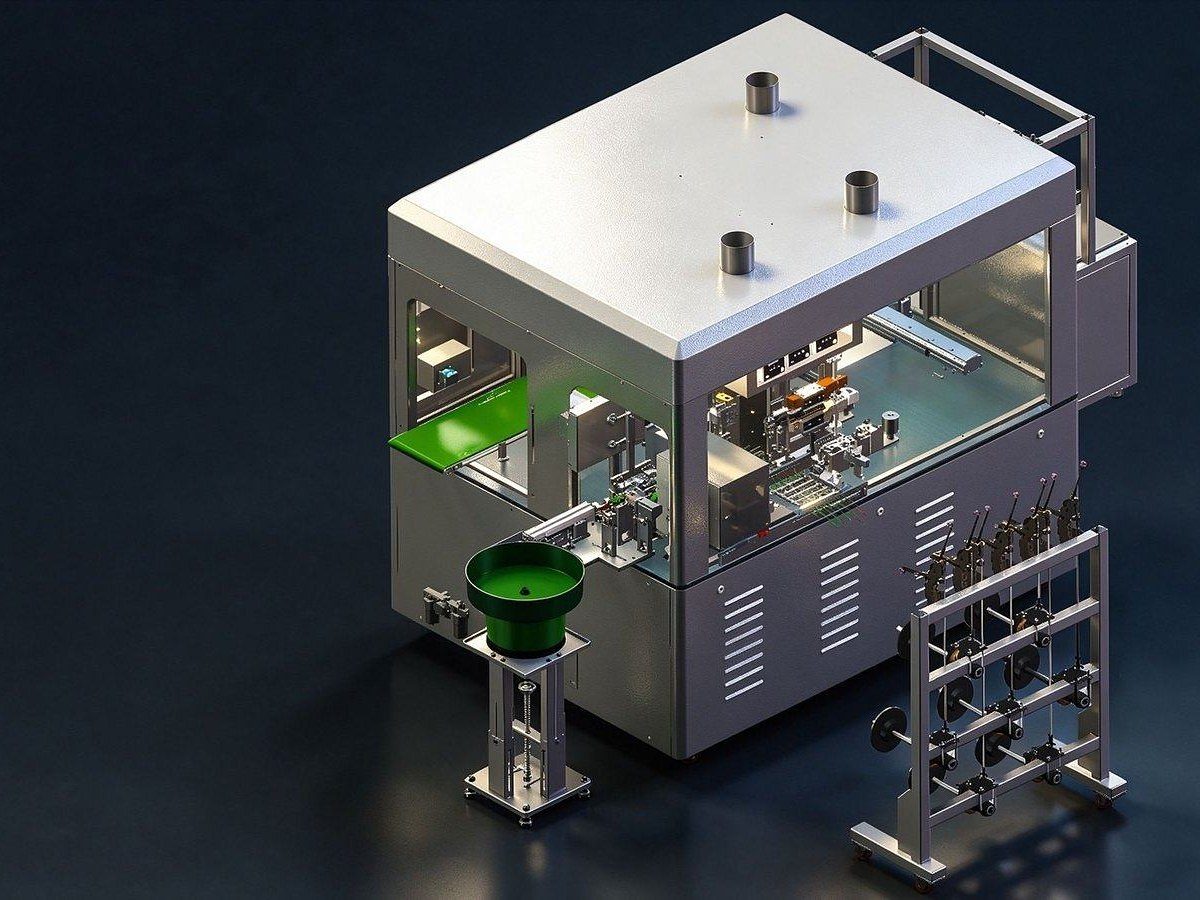
Custom soldering lines
Nebulizer mesh, microphone capsule, earphone, display, car fridge and backlight CCS lines: fixture transfer plus multi-axis platforms, single machine to full line.
View the machineAsk for a configuration for your part.
Send the part photo, the joint position and the cycle time; the reply is a process judgement and a machine layout.